
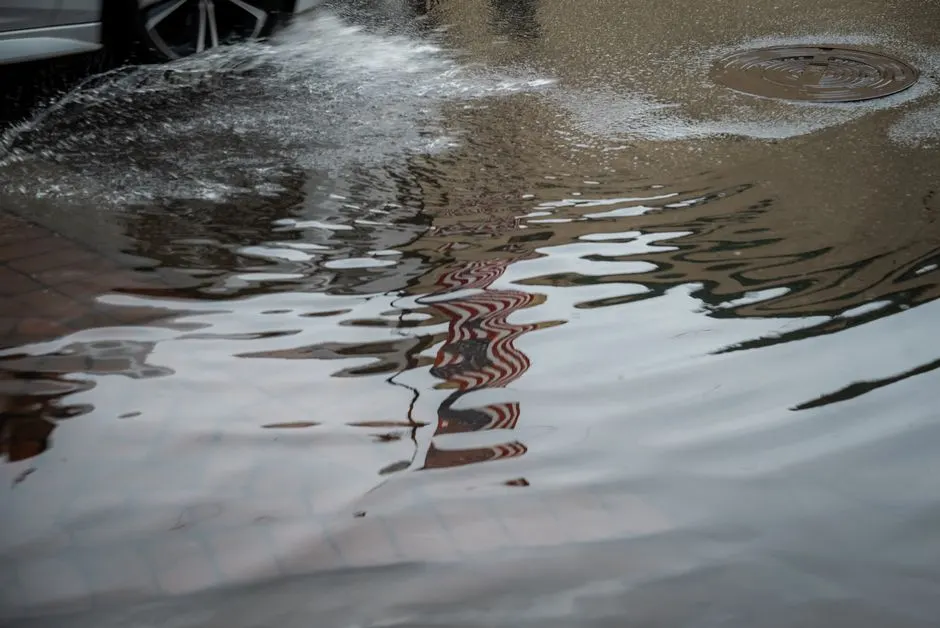
Heavy rain in Sarasota overwhelms storm drains faster than most people expect because a single summer downpour can drop 2 to 3 inches in under an hour, and that water carries sand, palm fronds, grass clippings, and street grit straight into the grate. The result is a drain that was flowing fine in May but backs up by July, sending water across parking lots, into garages, and toward foundations. Storm drain cleaning after rain in Sarasota is not the same job as a routine spring cleaning - it is a recovery job, and it needs to happen before the next storm arrives.
We run drain cleaning sarasota FL crews through these neighborhoods every rainy season, and the pattern repeats: the rain does not just fill the drain, it changes what is inside it. Below we break down exactly how heavy rain affects storm drain cleaning, what we find when we open a flooded grate, and how to time maintenance so you are not calling us during the worst of it.
Why heavy rain changes storm drain cleaning in Sarasota
Heavy rain changes storm drain cleaning in Sarasota because it turns a slow accumulation problem into a sudden blockage problem, and it deposits a different mix of debris than dry-season runoff ever does. During a dry stretch, a storm drain collects leaves, litter, and a little sand. During a 2-inch rain event, that same drain receives a slurry of saturated soil, mulch, roof grit, and palm seeds that packs into the low points of the pipe.
The physics are simple. Water moves fast across Sarasota's flat terrain, and when it reaches a curb inlet it slows down and drops its load. Sand and grit settle first, right at the throat of the drain. Organics - leaves, fronds, grass - mat together on top of that sand and form a cap. Once the cap forms, the drain stops accepting water even though the pipe below it may be half empty.
That is why a drain that looks clear from the street can be completely blocked 18 inches down. We see it constantly in older neighborhoods where the inlet grate is small and the pipe run is long.
What heavy rain actually pushes into Sarasota storm drains
What heavy rain actually pushes into Sarasota storm drains is a specific list of debris that we can predict almost by neighborhood, and knowing it helps you understand why cleaning after a storm takes longer than cleaning before one.
- Sand and shell grit - Sarasota sits on sandy soil, and runoff carries fine sand into every low inlet. A single storm can deposit 3 to 6 inches of sand in a curb box.
- Palm fronds and seed pods - cabbage palm fronds and their heavy seed stalks float until they hit a grate, then wedge into the bars and act like a strainer.
- Grass clippings and mulch - lawn crews blow clippings into the street, and the first hard rain sends them straight to the drain.
- Roof grit and shingle granules - older roofs shed grit that collects on driveways and washes into the street.
- Construction sediment - any active build or remodel in the area sends silt into the system for months.
In the Rosemary District and downtown, we also pull out a surprising amount of food wrappers, cups, and cigarette butts that have been sitting in the gutter for weeks. The rain does not create that debris - it delivers it all at once.
How heavy rain affects drains in Sarasota: the backup chain reaction
How heavy rain affects drains in Sarasota is a chain reaction that starts at the street and ends at your floor drain, and once you see the sequence you can spot a problem before it reaches your door.
- The curb inlet caps. Sand and organics seal the grate, so street water stops entering the storm system.
- Water ponds and finds the lowest point. That is usually a driveway apron, a garage slab, or a stairwell.
- Hydrostatic pressure builds. Standing water pushes against foundations, pool decks, and exterior walls.
- Private lines back up. If your property has a floor drain, a driveway trench drain, or a pool overflow line tied to the storm system, the backup can push into those lines.
- Sanitary sewers get overloaded. In heavy storms, groundwater infiltration can overwhelm the sanitary sewer too, which is when you see sewage backups in low-lying commercial buildings.
We handle the private side of that chain with storm drain cleaning sarasota FL, and when the backup has already reached a floor drain or a garage trench drain we clear those with floor drain cleaning sarasota FL. The key is to break the chain before step 4.
Why do storm drains clog during heavy rain in Sarasota FL?
Storm drains clog during heavy rain in Sarasota FL because the volume of water arrives faster than the inlet can accept it, and the debris that comes with that water mats into a seal over the grate. A typical residential curb inlet is designed for a certain flow rate, and a 2-inch-per-hour storm exceeds it by a wide margin.
There is also a maintenance timing problem. Most property managers schedule storm drain cleaning in the dry months, which is smart, but the drain then sits for weeks collecting windblown debris before the first big storm. By the time the rain hits, the drain is already half full.
We recommend a second cleaning pass in late May or early June, right before the afternoon storms settle in. That one extra visit is the difference between a drain that swallows the first downpour and one that floods the parking lot.
Storm drain cleaning before rainy season in Sarasota Florida
Storm drain cleaning before rainy season in Sarasota Florida should happen in April or May, and it should include more than a surface skim of the grate. Our pre-season service includes pulling the grate, removing sand and organics from the curb box, and jetting the pipe run to the main.
For commercial properties, restaurants, and HOAs, we also camera the line if there has been a history of backups. A drain camera inspection sarasota FL tells us whether the pipe is cracked, root-intruded, or holding a low spot that will collect sand all season. That is information you want in April, not in August when the lot is underwater.
For larger systems - shopping centers, condo associations, and municipal-style inlets - we use hydro jetting sarasota FL to scour the pipe walls back to bare concrete. Jetting removes the sand film that a snake or a hand rod leaves behind, and that film is exactly what grabs the next storm's debris.
Who is responsible for storm drain cleaning in Sarasota?
Who is responsible for storm drain cleaning in Sarasota depends on where the drain sits: the City of Sarasota maintains public storm drains in the right-of-way and public easements, while private property owners and HOAs are responsible for inlets, trench drains, and storm lines on their own land. The line is usually the property boundary or the back of the curb.
In practice, that means the grate at the street edge is often city-maintained, but the pipe that runs from your parking lot to that grate is yours. If your lot floods and the city drain is clear, the blockage is almost always on the private side.
We work with HOAs and commercial properties across the area on commercial drain cleaning sarasota FL, and the first thing we do is map who owns which segment. That saves a lot of finger-pointing when a storm hits.
If you are in a neighborhood like Burns Court drain cleaning sarasota, where mature trees and older infrastructure meet, the private-side responsibility is even more important to nail down before June.
Common mistakes we see after heavy rain
The most common mistake we see after heavy rain is waiting for the water to drain on its own and assuming the problem solved itself. It did not - the debris is still in the pipe, and the next storm will finish the job.
- Snaking a storm drain instead of jetting it. A snake opens a hole; it does not remove the sand. The hole collapses on the next rain.
- Cleaning only the grate. The blockage is usually 2 to 6 feet down the pipe, not at the surface.
- Ignoring the private line. If your lot floods but the street drain is clear, the problem is on your side of the property line.
- Skipping the pre-season pass. One cleaning in the fall is not enough for a Sarasota rainy season that runs June through September.
- Not documenting the condition. Without a camera or a before-and-after record, you cannot tell whether the line is deteriorating or just dirty.
We also see homeowners pour chemicals into a flooded storm drain. That does nothing for sand and organics, and it sends the chemical straight to a retention pond or the bay.
When to call a professional
Call a professional when water stands in a storm drain for more than 24 hours after the rain stops, when a grate bubbles or burps during a storm, or when you see sand and debris backing into a floor drain or garage trench drain. Those are signs the blockage is deeper than the grate.
We also get calls when a property has flooded twice in one season. Two floods mean the drain is not recovering between storms, and that is a cleaning and inspection job, not a wait-and-see job.
If you manage a property in a low-lying area - the Indian Beach drain cleaning sarasota area is a good example, where the elevation drops toward the bay - a pre-season inspection is worth more than an emergency call in July.
Our team finds the blockage, clears it, and tests the line with water before we leave. You will know the drain is flowing, not just that we were there.
Frequently Asked Questions
Why do storm drains clog during heavy rain in Sarasota FL?
Storm drains clog during heavy rain in Sarasota FL because 2 to 3 inches of rain in an hour carries sand, palm fronds, grass, and grit into the inlet faster than it can drain. The debris mats over the grate and packs into the pipe, sealing it even when the pipe below is clear.
How often should storm drains be cleaned in Sarasota Florida?
Storm drains in Sarasota Florida should be cleaned twice a year: once in April or May before rainy season and once in October after it. Properties with mature trees, active construction, or a history of flooding need a third visit in mid-summer.
Who is responsible for storm drain cleaning in Sarasota?
The City of Sarasota maintains public storm drains in the right-of-way. Property owners and HOAs are responsible for inlets, trench drains, and storm lines on private land. If the street drain is clear but your lot floods, the blockage is on your side.
How does heavy rain affect drains in Sarasota?
Heavy rain affects drains in Sarasota by filling storm lines with sand and organics, raising groundwater pressure, and overloading sanitary sewers. That combination can push water into floor drains, garage trench drains, and low fixtures within hours of a storm.
Can I clean a storm drain myself?
You can clear surface debris from a grate with a rake or shovel, and that helps. You cannot safely remove sand and packed organics from the pipe without jetting equipment, and a snake alone will not clear a storm line. Deeper blockages need a professional cleaning.
Get help with drain cleaning sarasota in sarasota
If a storm has left your lot, garage, or floor drains backed up, we can clear the line and confirm it is flowing before the next round of rain. Call us at +18312931204 to schedule storm drain cleaning in Sarasota.